

WHAT I DO
What we do at TANE
Taking daily life back into your own hands.
We write about food, about daily life, about skin. From outside it can look like we have spread ourselves thin.
But inside, it has always been one thing.
Below are five of them.
Choosing, making, tracing, connecting, handing over.
The things we have made are what the hands learned along the way.
This is not all of it.
It is a rough list. In detail there is more.
It is handed over as something that has long been said.
Whether it works is another matter.
Not to hand you the right answer, but so that you can choose for yourself.
01 / CHOOSING
When making something,
what do we look at to choose?
This is the core. Everything below it is only an example of this.
- How to choose a thing
- The thinking that underlies choosing what we wear, eat, and live in
- Choosing tools and vessels
- Reading ingredient and raw-material labels
- Choosing materials (for salt: which sea, and how it was boiled down)
- How to choose the things we decided not to make
- Not only what to add, but what to take away
02 / MAKING
What we have made
One at a time, as the hands learned them.
They only grew in order. It was not all possible from the start.
Food
Seasonings
Koji / shio-koji / shoyu-koji / ama-koji / consommé koji / amazake / miso / soy sauce / vinegar / persimmon vinegar / ketchup / fermented ketchup / oyster sauce / chilli oil / dressings / mayonnaise / bouillon / salted lemon / and more
Fermenting
Miso / amazake / nukadoko (rice-bran bed) / pickles / fermented pickles / sauerkraut / yoghurt / natto / kimchi / gochujang / and more
Bread and cultures
Starting a wild culture / carrying a culture forward / raising a starter / sourdough / sake-yeast bread / baking by watching the ferment
Keeping the season
Plum work / umeboshi / dried goods / preserved food / gari / pickled cucumber / jam / syrup / fruit vinegar / salted vegetables / and more
Drinks
Tea blends / herbal tea blends / coffee / and more
Putting a meal together
Cooking with the season / how to apply heat in summer / shindofuji ── the idea that body and land are not two / starting from what is in the house / using fermented seasonings in everyday cooking / balancing sweet, salt, sour and savoury / using a whole ingredient / carrying leftovers into the next dish / adjusting so children can eat it / food for children and weaning / recipe development
Eating by the calendar
Food for the seasonal festivals (otoso / nanakusa / the peach festival / pumpkin at the winter solstice, and so on) / putting the year’s markers on the table
Other
Bacon / sweets / acorn as a complete food / and more
We make alcohol too.
But in Japan you cannot make anything over one percent alcohol without a licence. The same work by hand, and what you are allowed to do changes with where you live.
Daily life
Growing, and keeping it turning
Saving seed / a kitchen garden / growing vegetables / growing herbs / growing sprouts / growing mushrooms / compost / building a cycle that uses everything
compost → soil
All the way to saving the seed,
and round again
but never the same
turning into knowledge, like a spiral
Setting the kitchen in order
Choosing cooking tools / knowing how tools differ by material / choosing storage (crocks, wooden barrels, jars) / caring for tools / storing so food is not wasted / bringing older kitchen work into the life you live now / beeswax wraps
Washing
Laundry / making and choosing detergent / knowing the kinds of soiling / not over-washing / washing only where it is needed / washing to suit the material
Things for the house
Laundry detergent / toothpaste / mouthwash / cleaning (baking soda, citric acid) / candles / and more
Mending, and using things a long time
Knitting / sewing machine / hand sewing / repairing / remaking / using it up / and more
Before replacing it, try to do something about it with your own hands.
Skin
Making
Soap / shampoo / conditioner / basic skincare / cream / sunscreen / beeswax and oil / foundation / lipstick / blush / and more
Making it for the person
Cosmetics made for one person / formulating for the season (summer, winter) / working out the balance of oil, wax, water and powder / adjusting how it feels to use
Looking at skin
Looking at the state of the skin / how it changes with the season / how it changes with age / the life around it / thinking about meals and sleep as part of it / looking at what is in a cosmetic / building a basis for choosing cosmetics
We never think about skin by looking only at cosmetics. When one place is stuck, look at the one next to it.
Using plants
Infusing herbs / tinctures / steeping plants in oil / building a herbal tea / using scent
One plant may be eaten, drunk, used on the skin, and used around the house.
Home care
Tinctures / the old home remedies / using herbs
It is handed over as something that has long been said.
Older ways are easily taken for outdated, but they are a storehouse of knowledge.
How did they come to know that? How did they know it at all? How did they keep it? Just thinking about it, just imagining it, respect for earlier generations rises up.
I want to connect it, keep it, hand it on.

03 / TRACING
Tracing why it became that way
Not researching. Research is a word for collecting results. Tracing is a word for walking a road.
- The history of an ingredient
- What people in Japan used to eat
- Native varieties
- How fermentation works
- Cosmetic ingredients
- How skin works
- How people used to live
- What tools were made of
- Laws and labelling rules
- Setting current science and older knowledge side by side
- Tracing back, once, what is taken for granted
We look into it, try it,
and keep what is comfortable for us
04 / CONNECTING
Between the maker and the person using it
Making all of it yourself is hard.
I do not make everything every day either.
Starting from what you can is enough.
There are things you cannot make.
There are days you do not. Not making is also a way of choosing.
What you choose then ── that runs straight on from “choosing, and telling things apart.”
There are people still working the old way.
People who hold to something and make one thing at a time, with great care.
We connect with them, and pass on what we hope will continue.
- Knowing the maker
- Listening to them
- Watching how it is made
- Writing the name, and why it was chosen
What you can get changes with where you live
There are things I use myself.
And there are makers I hope will continue whose things I cannot get, because of where I live.
So we write separately whether we use it.
This is the same shape as the line about alcohol under “making.”
The same work by hand, and what you can do changes with where you live.
What you can get changes the same way.
The line I hold here
- Knowing the makerSeeing how it is made, seeing the materials, seeing what they hold to ── and thinking: I see, I want to use this, I want this to continue.
- Writing the reason with itNot “it is good,” but what I looked at.
- Never “just buy this”Look inside. Trace the method. Then decide. No different from making.
- Not making is not placed belowWe do not arrange it so that the person who makes is above the person who buys.
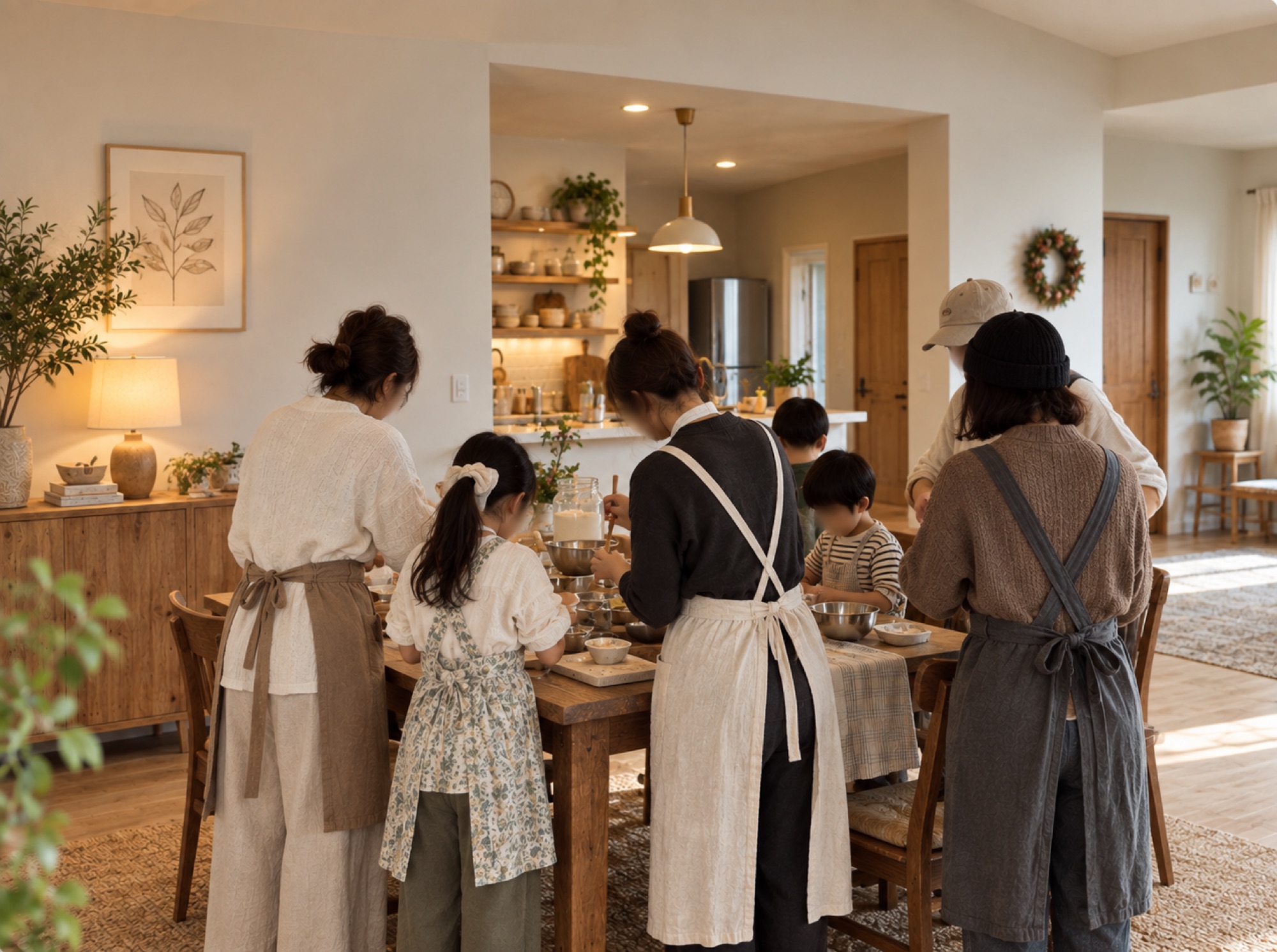
05 / HANDING OVER
We do not want to spread our own way
We want more people to find their own.
The order below is the order of what we are putting weight on now.
On-demand and online
- Putting it into a form you can learn on demand
- Teaching online
- A form that works for someone doing it for the first time
- So that you can do it again at home, on your own
- Explaining why it is done that way
Workshops
- Fermentation workshops
- Skincare workshops
- Workshops in work by hand
- Actually making it together
- Doing it alongside children
Writing and keeping
- Free reading
- Journal
- Photographs and film
- Putting older knowledge into current words
- Keeping it as household knowledge
- Handing it to the next generation
What has been done
- Studied French-style medical aromatherapy and medical herbalism
- Experience in Japan, Korea, Australia and the United States
- Experience in hospitals
- Experience in beauty salons
- Involvement in product development
06 / AND ALSO
Other things we work on and talk about
These are not things you make.
But half of what we want to hand over is here.
The calendar and the seasons
- The old calendar / the twenty-four seasonal markers / solstices
- The rhythm of the seasons
- Festivals and observances
- Changing how you eat with the season
- Changing how you care for skin with the season
History and culture
- The history of ingredients / food culture in Japan
- Land and food / shindofuji (身土不二) ── body and land are not two
- The food and household knowledge of different peoples
- How people used to live / where tools came from
- Where words came from (anbai, yakumi, jabón, the phrase for “what we wear, eat and live in” …)
- Similar knowledge around the world (rice-bran bags, jodu (조두) in Korea, the Italian scrub mitt …)
- The knowledge of earlier generations
The natural world
- Nature / the patterns inside it
- Plants / microbes / soil
- The cycle: soil → seed → vegetable → table → scraps → soil
- That every living thing is trying to leave a seed
Living with children
- Pregnancy / how to spend that time / how the mind is during it
- After birth / what a baby wears, eats and lives in
- Eating with children / making with children
- Handing the skills of daily life to children
- Handing it to the next generation
Knowing, and choosing
- What science has settled, and what it has not
Keeping what we know in four separate places
(science / still being studied / inherited knowledge / my own experience)
- What we let go of in exchange for convenience
- Getting your own senses back
- Setting aside, once, what is taken for granted
- Knowing what is comfortable for you
- Choosing for yourself
- Living the knowledge, so experience turns it into something you hold
- Handing household knowledge to the next generation
- The people you meet
Almost every day, something is being made.
But it was not like this at the start.
You try one thing, you become able to do it, and your hand reaches for the next.
Doing that, it became this, at some point.
So this is not a story about talent. It is a story about time, stacked up.
At the start, one is enough.
Would you pick one from this list that caught your eye?
About TANE
The name, the logo, the people behind it.
Why we do this is written there.
What we choose
What to choose when you are not making it.
Things whose makers we know, with the reasons.
On-demand classes
So that you can make it at home, on your own.
About the classes we are making now.