
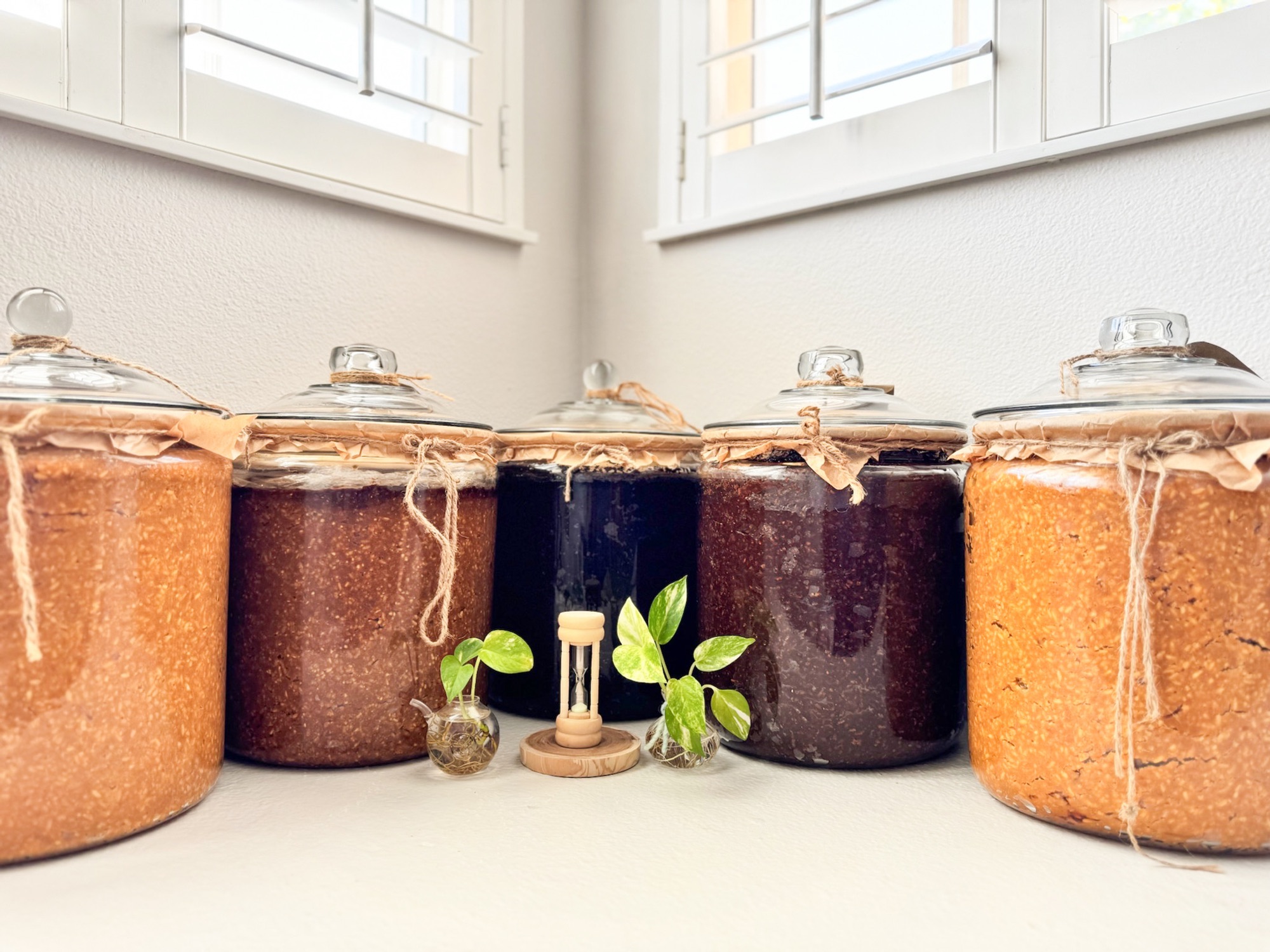
FOOD & FERMENTATION
Food & Fermentation
Before the how ── why this soybean, why this salt
Knowing the ingredients. Watching, the way you would talk with something alive
Home›Food & Fermentation
Take miso.
I thought it was something you buy.
But you can make it.
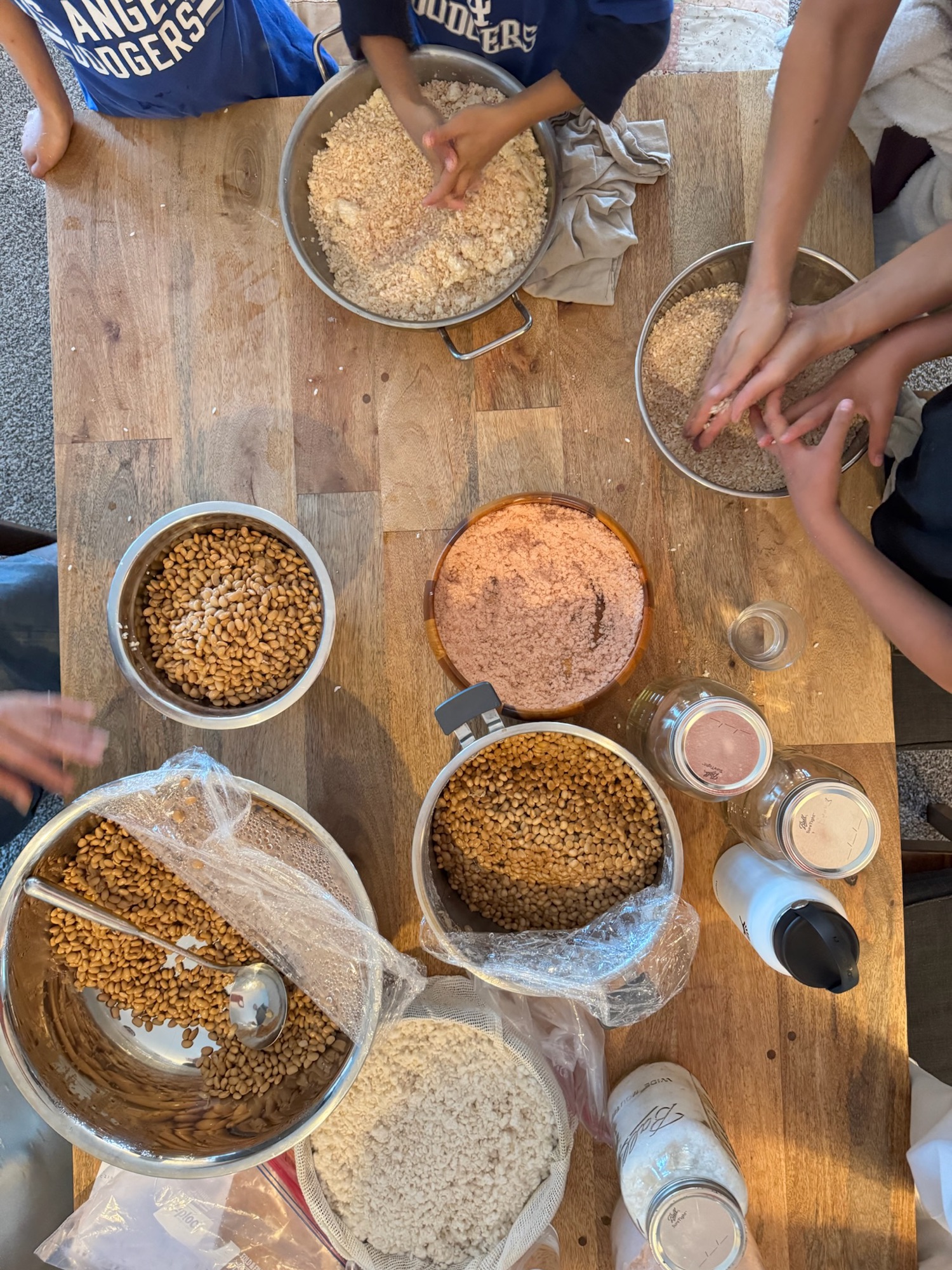
Soybeans, koji, salt. That is the whole list.
Once it is packed away, all that is left is waiting. A year later, you eat it.
The hard part is not the making. It is which soybean, which koji, which salt. There is no right answer here.
So what TANE hands over is not the answer.
It is what to look at when you decide.
01 / WHAT WE MAKE
Pack it away, and wait

Koji
Where all of it starts.
You put the culture on rice, keep it warm, and wait.
After that the koji warms itself.

Miso
Soybeans, koji, salt.
Once it is packed away there is nothing for me to do. If anything: speak to it now and then, look in on it, check that no mould has come.

Sourdough
Flour, water, and the cultures already in the air. That is what lifts it.
Keep a starter going and there is fresh bread at home.

Pickles
Salt and time, to keep things.
The craft from before refrigerators.
Some are put down in salt or sugar, some borrow the work of cultures.
There are many kinds.

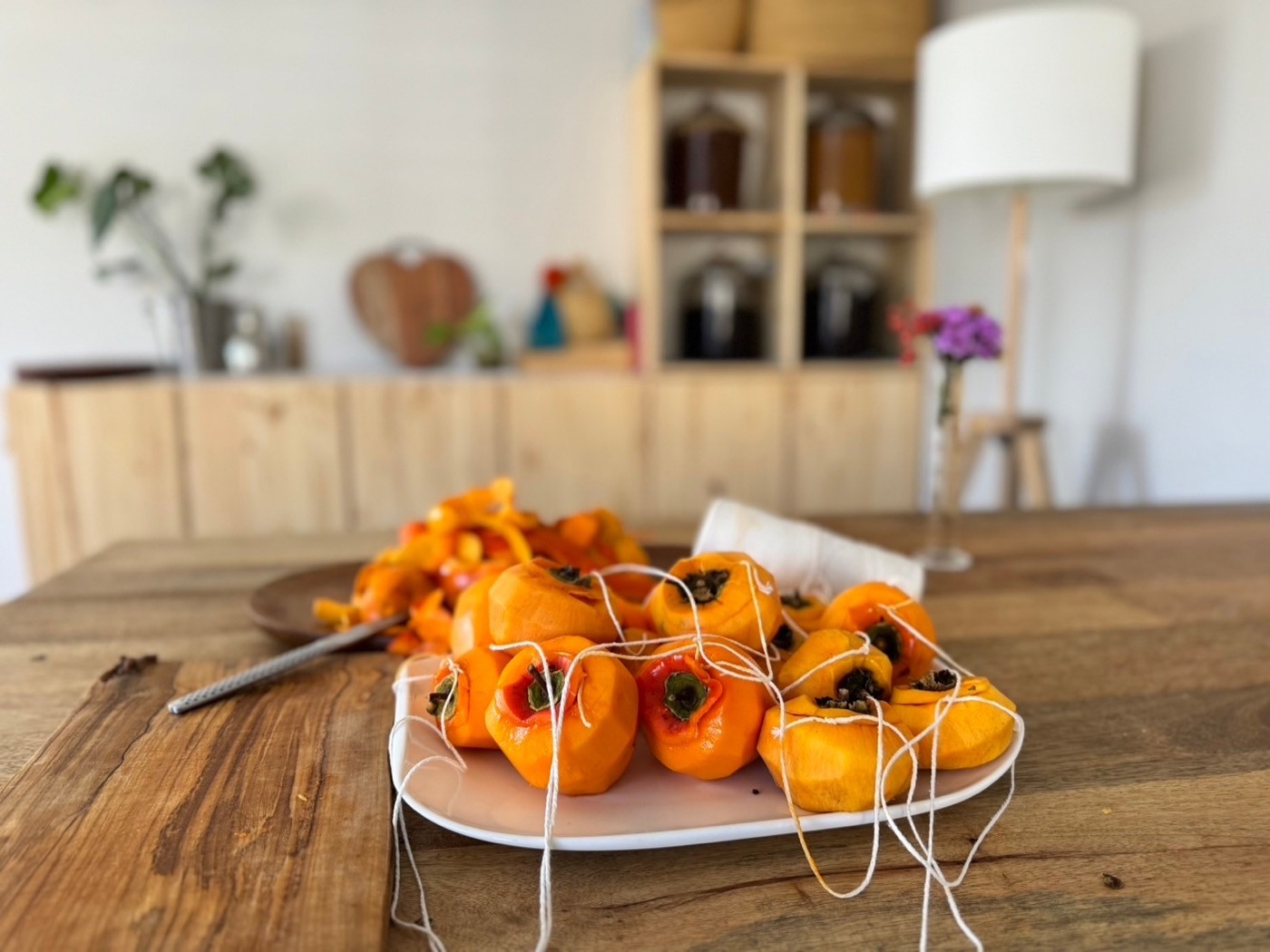
Drying
A way to eat what belongs to one season on a day that does not. Preserved food.
02 / WHAT TO LOOK AT
“Why this soybean,
this koji, this salt?”
This is where a workshop spends most of its time.
The method itself takes under ten minutes once you have it.
But how you choose the ingredients is different every time.
This year’s soybeans. The koji you can get. The salt sold where you live.
When the conditions change, the choosing changes.
So we hand over a way of seeing, not an answer.
Read the backSee what is in it.
If a name is one you cannot read, look it up once
- Set three side by sideCompare three from the same shelf. What differs, and what the price is actually for
- Trace the methodHow it was made. Some were given time; some are made quickly
Fit it to your conditionsWhat you can get, a price you can keep paying, what your family likes.
This part is different for everyone

03 / A LONG TIME
Not a new idea
Miso, pickles, drying ── all of it has been going on since before refrigerators. It began as a way to keep things, and along the way it came to be used for flavour too.
Fermented food has long been said to be good for the body.
Some hold that it helps digestion.
It is not that fermented food suits everyone.
It does not agree with some people.
It has been said that when the land changes, it can stop agreeing with you.
How far any of it has been confirmed is another matter.
What science has settled
What is still being studied
What has long been said
What I have felt myself
──
I would rather keep these four apart.
What TANE hands over is not “make it because it works.”
It is the fact that this way of making has been here all along.
04 / ONE THING TODAY
Read the back of the miso in your fridge
That is enough.
What is in it.
Where it was made.
How much time it took.
Some things are written there, and some are not.
Look, and if you think it is fine as it is, then it is fine.
Changing it is not the point.
Being able to look for yourself, and decide for yourself ── that is the point.