TANE KOYOMI
Kanro寒露 · “cold dew”
The time when the dew begins to feel cold
Home›TANE KOYOMI›Kanro
 When is Kanro?
From around October 8 until the next term, Soko (霜降, “frost descends”). About two weeks.
It is set by where the sun is in the sky, so it falls on almost the same date every year.
What is this time like?
Kanro (寒露) is written “cold dew.” It is the time when the dew that settles on grass and trees begins to feel cold.
By day the sun brings the temperature up, but at night radiative cooling brings it sharply down.
The gap in temperature within a single day grows wide.
There are more clear days. In the mountains the leaves begin to turn, and the fall flowers come into their best.
「一雨一度」 (hito-ame ichi-do, “one rain, one degree”) ── in fall, people say it gets 1°C cooler each time it rains.※1
When and where can dew be found?
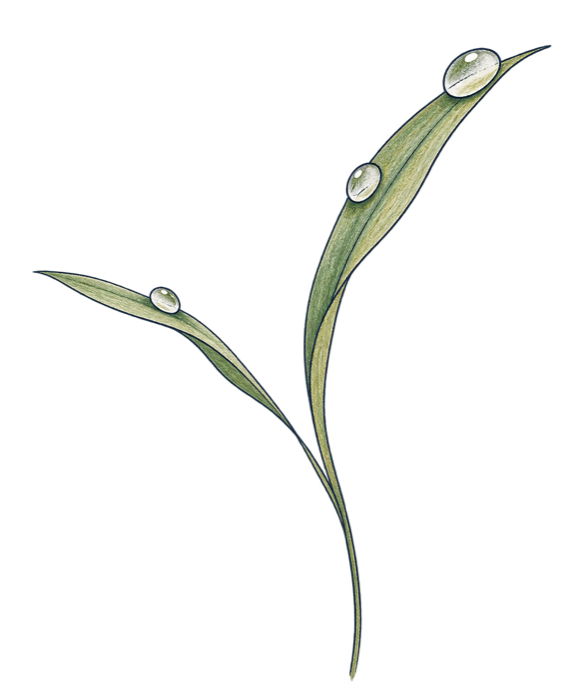
The morning after a clear night with little wind. Around sunrise.
Clouds are something like a blanket.
On a night with no clouds, the heat of the ground escapes to the sky,
and the blades of grass get quite cold.
When the wind is light, that cooled air stays where it is.
The places to look: blades of grass, car windows, low-lying ground.※42
And in California?
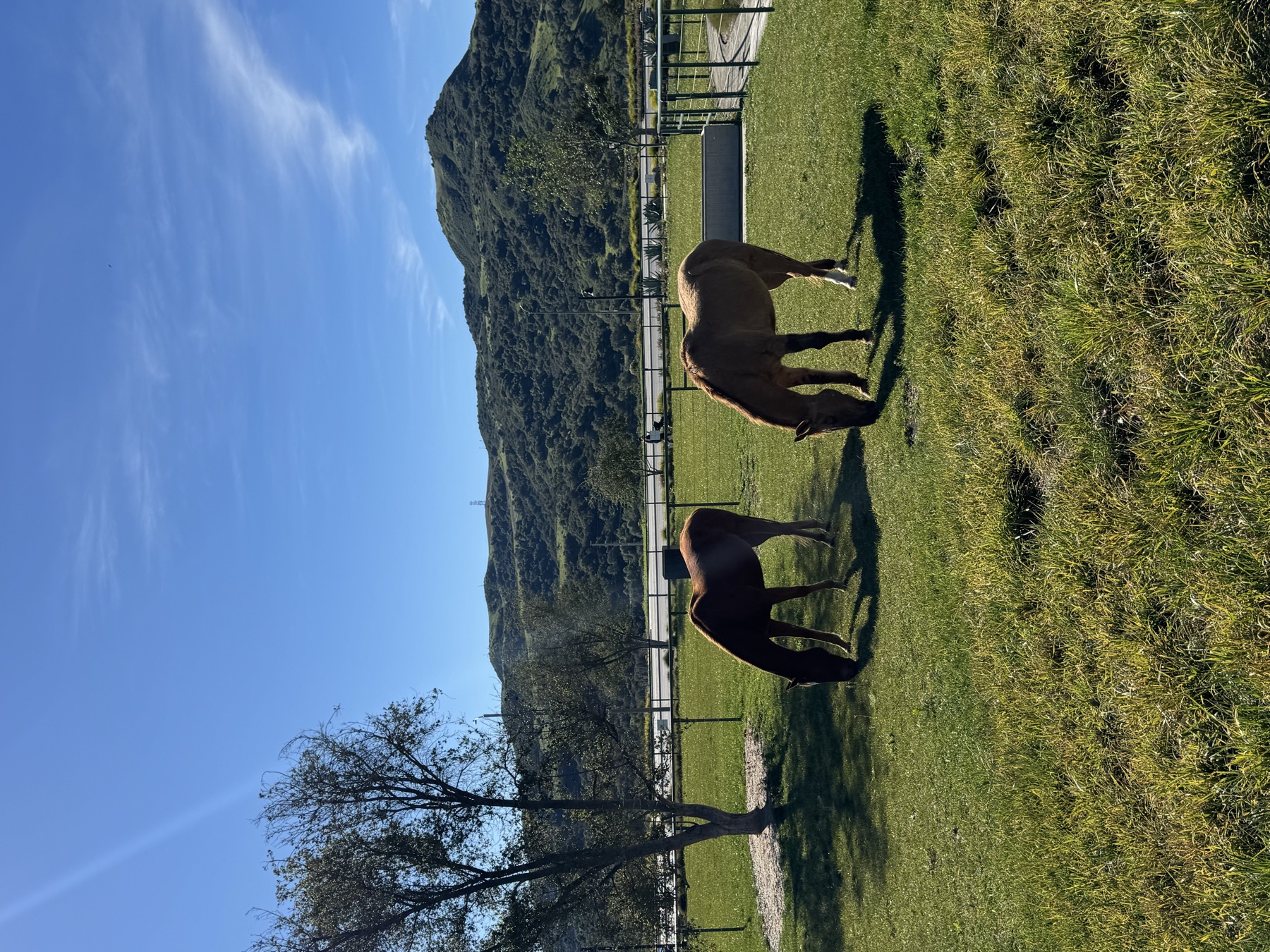
In California the days are still fiercely hot. Told that it is Kanro, I can hardly believe it.
But the nights are cool, and in the early morning there is sometimes dew that has quietly settled.
Even when I cannot feel it yet, the season is coming closer, from underfoot.
TANE
The moment Kanro begins is the same everywhere in the world.
But at that moment it is afternoon in Tokyo, and in California it is still the night of the day before.
So the date on the calendar is off by one day.
Japan (Tokyo)
October 8
Sunrise 05:41 Sunset 17:16
Daylight 11 h 35 min
California
October 7
Sunrise 06:49 Sunset 18:28
Daylight 11 h 39 min
The difference in the length of daylight is 4 minutes.
Times are by the clock of each place. Checked against the sunrise and sunset times of the National Astronomical Observatory of Japan (within 1 minute). From year to year the difference is a few minutes.
The length of the day is almost the same. That is because the two latitudes are only 2 degrees apart.
The reason the calendar does not line up is not the sun. It is the land.
The same length of day is received with a different temperature, and by a different soil.
TODAY
What to do today
These carry the same numbers as the six posts on Instagram. Tap one and it takes you to that part.
EAT & DRINK
Eat & drink
What is in season around now, and a cup of tea.
- In season in fall
- Food for the day of Kanro
- Why soba tea
- How to brew soba tea
- Reading the bag
- The “pesticide-free” label
- Fall tea
- Astringency in dried persimmons
- Persimmons in California
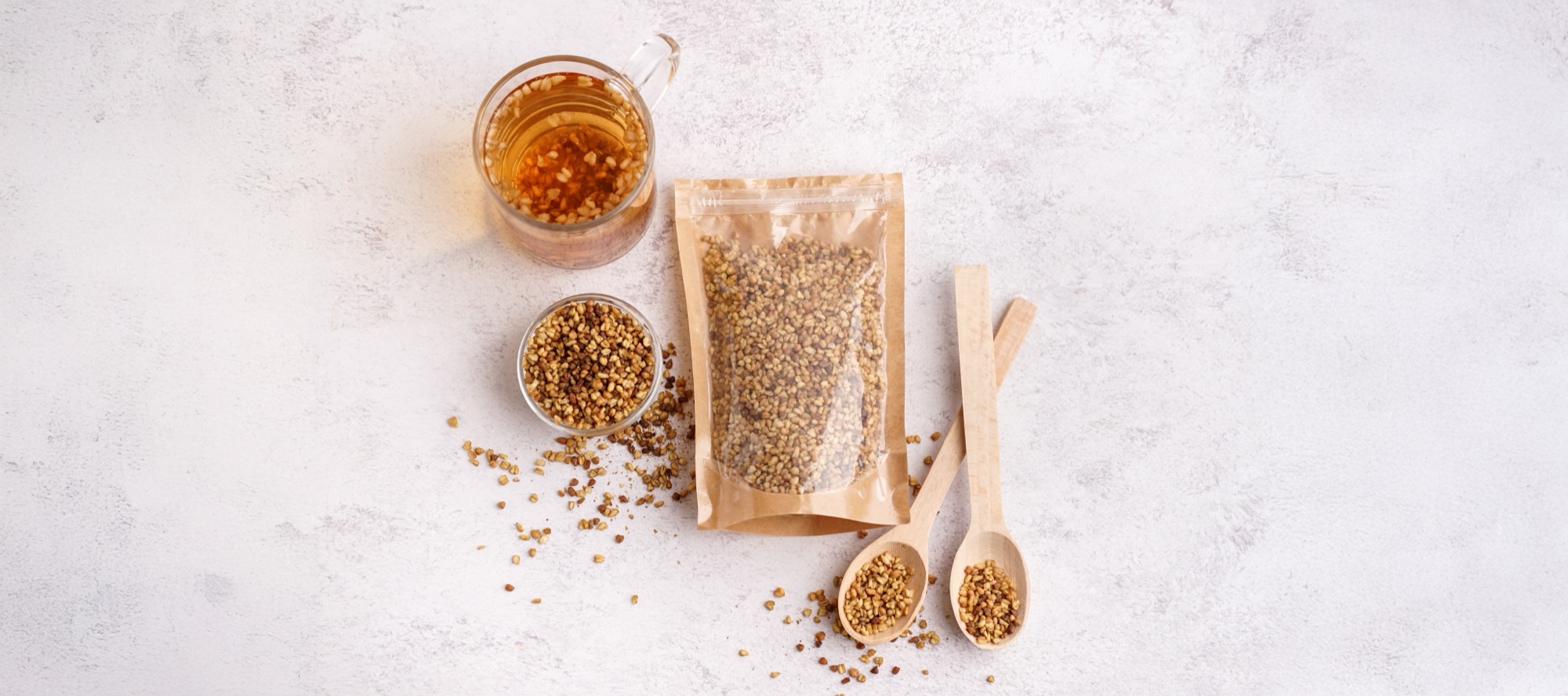
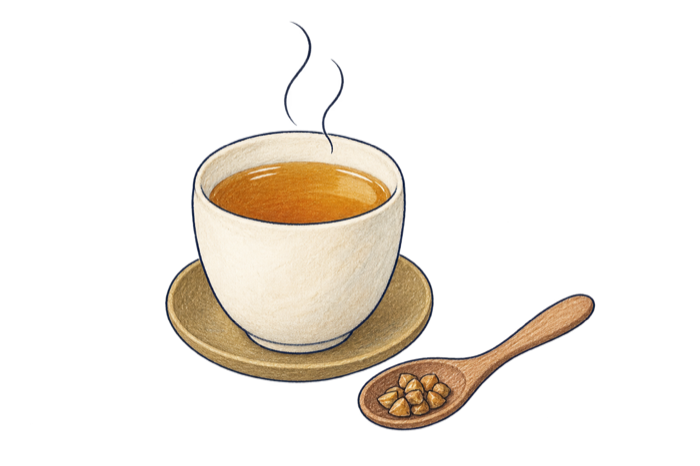
Soba tea ── some people, surprisingly, do not know it.
That toasty aroma. Once I had tasted it, it became a tea I want every now and then.
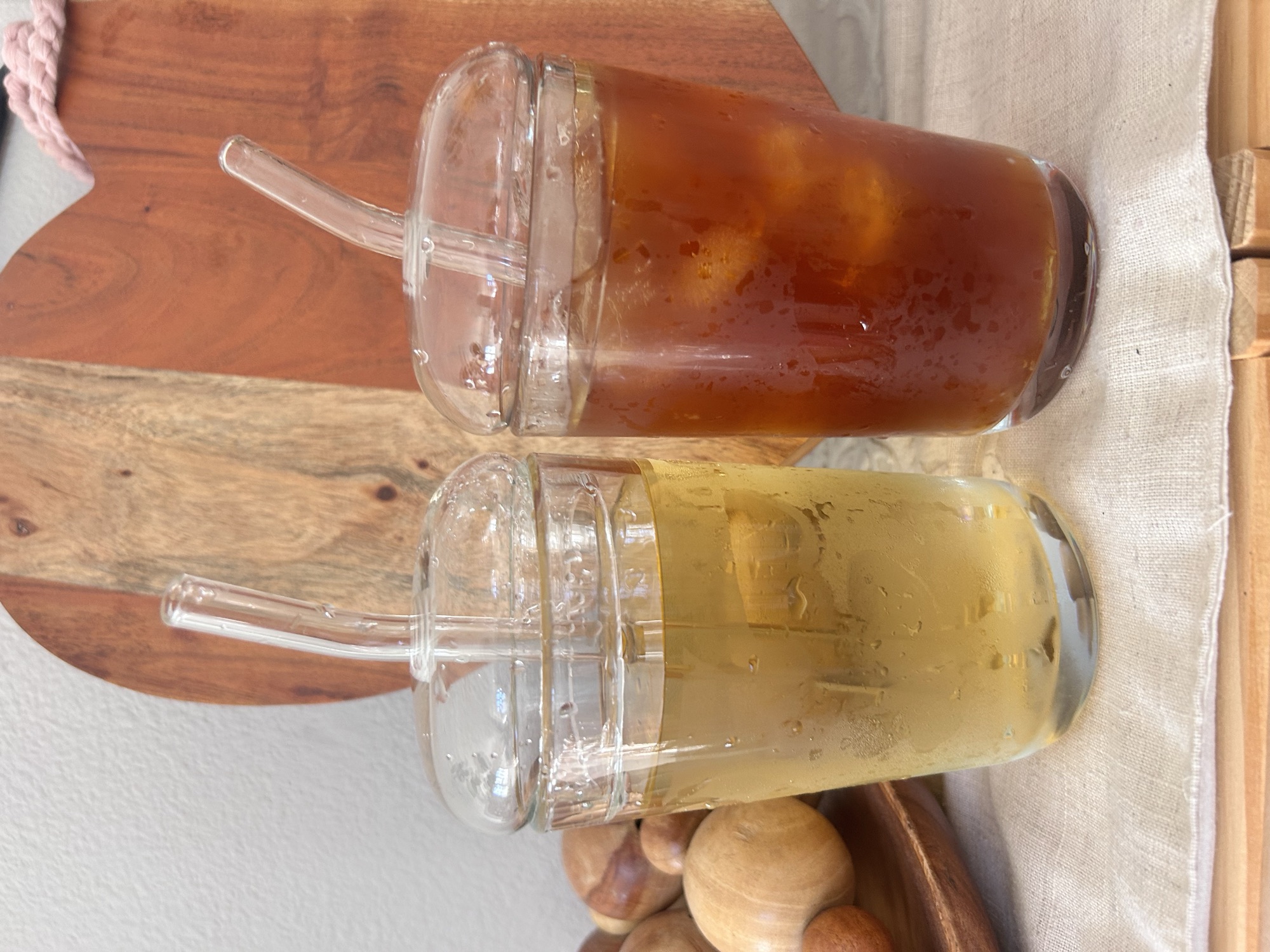
It works iced, and it works hot. Around this time of year, I find my hand reaching for it.
TANE
See the soba tea TANE chooses →
What is in season around now?
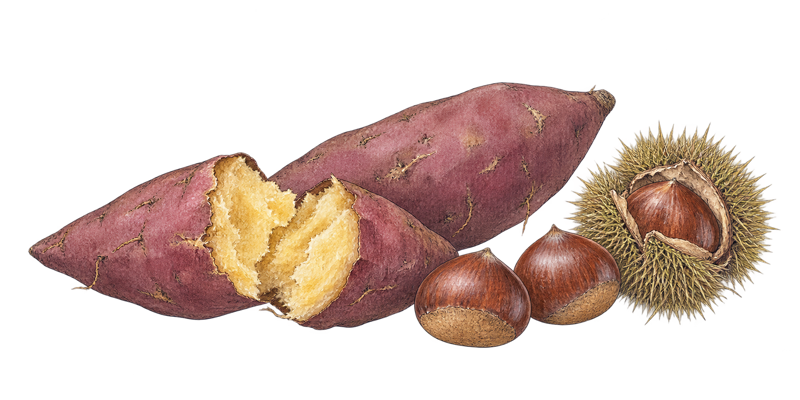
Chestnuts. Mushrooms (matsutake, shiitake). Bok choy.
Taro, sweet potatoes, lotus root.
Sanma (秋刀魚, Pacific saury), salmon, aki-saba (秋鯖, fall mackerel). This has long been said to be when they are at their fattiest. The character for “fall” (秋) is in the names, too.
Persimmons, apples.※1
Sweet potatoes, I steam. The one I love most is ishi-yaki-imo, sweet potato roasted on hot stones. Chestnuts go into a Mont Blanc.
TANE
For finding Japan’s seasonal foods and familiar things in California → Stores where they are easy to find, with addresses
Is there a set food for the day of Kanro?
There is not.
Beans at Setsubun.
Kabocha squash at the winter solstice.
Rice porridge for Nanakusa, the day of seven herbs.
I looked through six sources for that kind of “food for this day” for Kanro.
It was not written in any of them.
There is plenty in season. There is no rule. So it can be your own decision.※2
Why soba tea?
Around now, the buckwheat is ripening.
Hitachi Aki Soba, from Ibaraki, is sown in mid-August, blooms white in September, and is cut in late October.
I looked for a custom of “drinking soba tea at Kanro” and did not find one. This is TANE’s suggestion.※3
How is soba tea brewed?
In a kyusu or a teapot, about 1 tablespoon. Boiling water goes in, and it sits for 2 to 5 minutes.
For a larger batch, a kettle.
Once it boils, it simmers for about 3 minutes.
TANE uses a ceramic kettle, for about 3 minutes.
For iced tea, I let it cool down first,
then move it to a glass bottle and into the fridge.
The groats left after brewing go back to the soil. (Compost)
Starting from raw buckwheat groats: a frying pan over medium-low heat, about 10 minutes of roasting while stirring.
Tartary buckwheat (dattan soba, 韃靼そば) is a different species from common buckwheat, and it has a bitter taste.
In Japan, buckwheat is one of the items for which allergen labeling is mandatory. For anyone with a buckwheat allergy, hojicha or barley tea instead.※4
Where on the bag to look?
TANE looks at eight things.
- Whether it is made of buckwheat alone ── the ingredients list
- Where it was grown ── inside the parentheses in the ingredients list
- How it was grown ── the Organic JAS mark / 「栽培期間中農薬不使用」 (“no pesticides used during cultivation”) / in the U.S., USDA Organic
- Whether anything else, such as flavoring, has been added ── the ingredients list
- Whether the groats still have their shape ── whole groats / tea bags
- How it was roasted ── light roast, medium roast, and so on. Often it is not stated
- How it is packaged ── including what the tea bag itself is made of
- Who makes it ── whether the name of a farm or a company can be seen
Why do so few bags say “pesticide-free”?
In Japan, farm products may not be labeled 「無農薬」 (“pesticide-free”) or 「減農薬」 (“reduced pesticide”).
It is said that “pesticide-free” was taken to mean that no pesticide residue remains at all, and that this led to misunderstanding. The label reads 「栽培期間中不使用」 (“not used during cultivation”) instead.
「有機」 and 「オーガニック」 (both “organic”) can be used only on things that carry the Organic JAS mark.
So in front of the shelf, these two phrases are the ones to look for.※5
Does tea have a fall picking, too?
It does. Shūtō bancha (秋冬番茶, “fall-and-winter bancha”) is picked from late September to around late October.
Kanro is right in the middle of that season.※6
Bancha, or tea leaves that have gotten old, can be made into hojicha at home.
A frying pan, over medium-low heat. About 5 minutes, until the color changes.
Once it has changed, it goes straight into another dish.※36
Where does the astringency in a dried persimmon go?
It does not go anywhere. It is still there.
People say that drying “takes out” the astringency.
But in fact it has only changed into a form that does not dissolve in water, so the tongue no longer senses it.
When the skin is peeled, a film forms on the surface of the fruit and air stops passing through.
Inside, the astringency keeps changing into the form that does not dissolve in water.
Peeling is not only for drying. It is to stop the breathing inside.

Can persimmons be dried in California, too?
They can. Astringent persimmons (Hachiya) are grown here.
The stem cap stays on and the skin comes off. They are threaded on a string. About a month, somewhere the air moves well.
They also appear in the Engishiki (延喜式), a book of regulations from the Heian period, as a sweet for ceremonies.※37
A University of California research and extension center holds a “Hoshigaki Workshop” in September. Hoshigaki (干し柿, dried persimmon) has become the name, in Japanese, as it is.
The persimmon-picking events, though, are in September and November. Not in October, when Kanro falls.
The day is the same length, but the persimmons come in a different month.
When I dried persimmons, it was November.
TANE
CARE
Care at home
On a clear day, starting from one spot.
- What mushiboshi is
- When to air
- What to air, and how
- Bringing back a shrunken sweater
- Keeping insects off clothes
- The opposite of Japan’s way
- California’s clothesline law
- What the “smell of the sun” is
- Where to start
I love putting the futon out in the sun on a clear day.
When I bring it in it smells of the sun, and it feels good.
In California, depending on the area you live in, rules prohibit hanging laundry out on the balcony.
Many households use a dryer day to day. So the occasional day when I can hang things outside makes me happy.
TANE
What is mushiboshi?
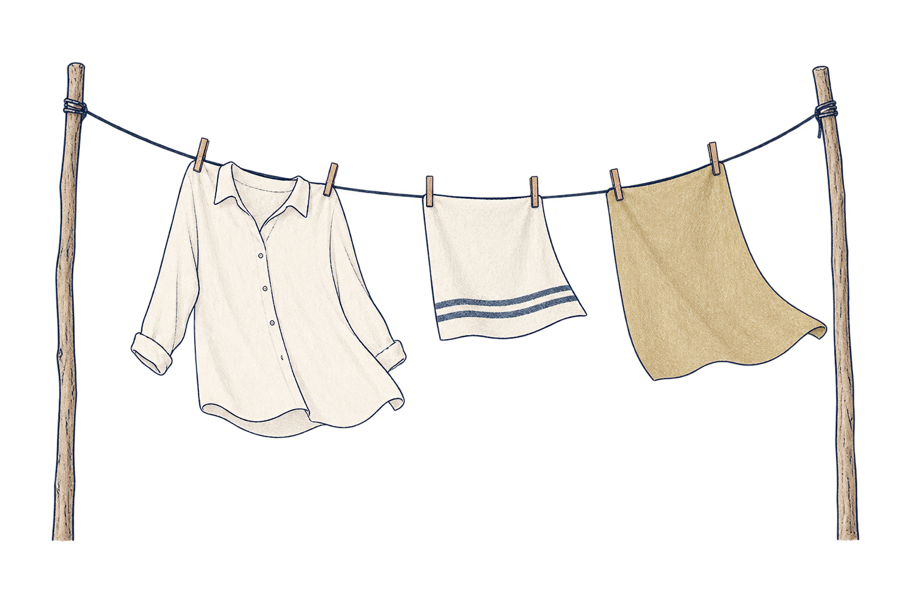
Mushiboshi (虫干し, “airing against insects”) is hanging clothes, books and tools in the shade and letting air through them, to keep off insects and mold.
The time for it is the doyo period of summer, or a clear day in fall.
It is not an observance of Kanro alone. It is care for daily life in the time from Kanro to Soko, when the air is turning dry.※9
When to air things?
In the daytime, on a day when the air is dry after several clear days in a row.
Kimono shops say “after 2 to 3 days of clear weather” and “from about 10 a.m. to about 3 p.m.”
I did not find an official source. The wording also differs a little from shop to shop.※10
What to air, and how?
Futons and cotton things feel good after time in the sun.
Silk and wool are dried in the shade. Sunlight can turn them yellow.
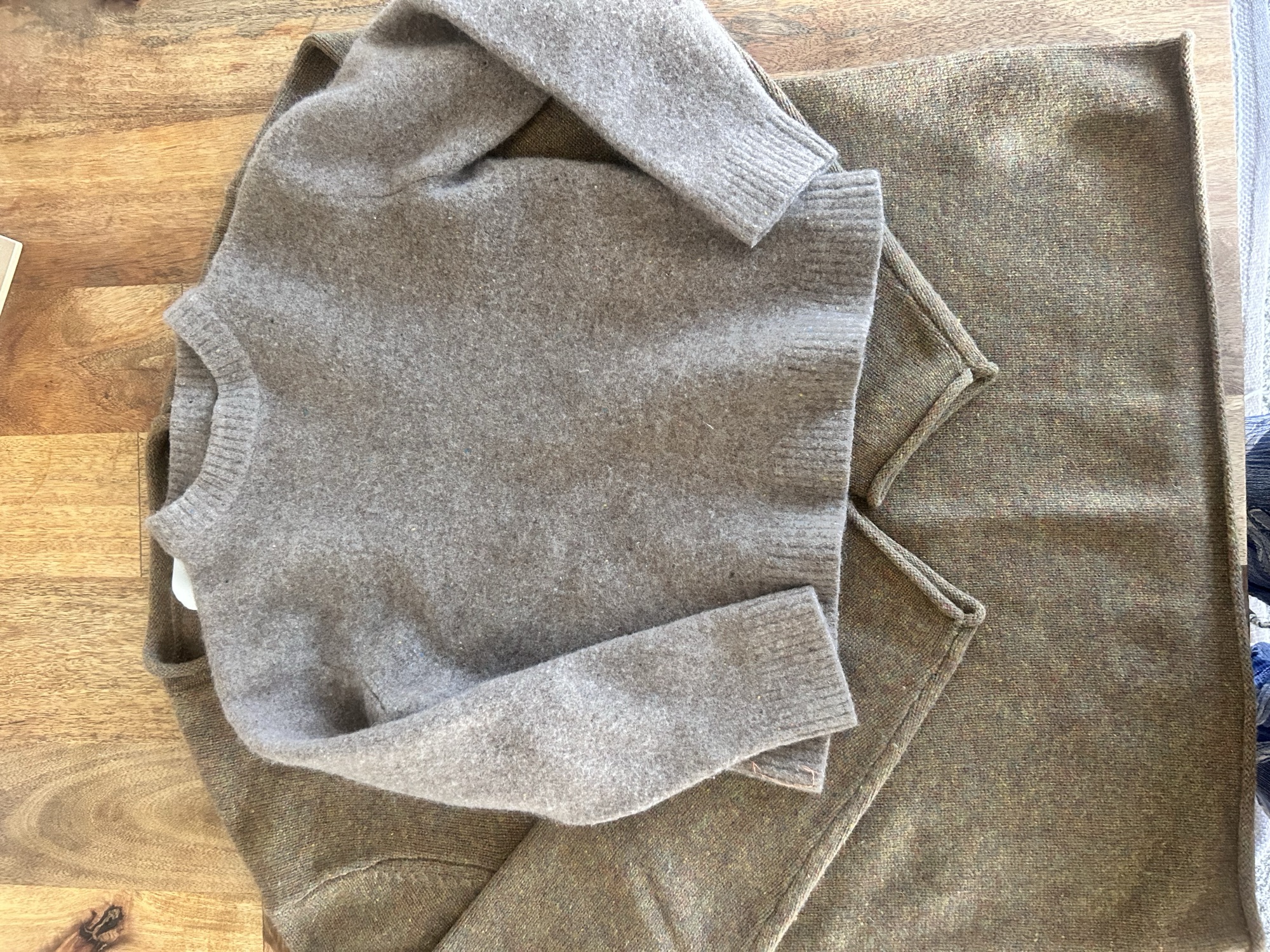
I have dried silk in the sun and had it turn yellow, and I have shrunk a wool sweater down to about a child’s size.
※ A word of care: when wool goes into the dryer, even an adult man’s sweater comes out about the size for a seven-year-old.
Books stay out of the sun. The dust is brushed off. Dust draws insects and takes up moisture.※11
Can shrunken wool be brought back?
The surface of a wool fiber is like scales.
With heat, water and being rubbed about, the scales open and catch on the fibers next to them. They set that way. This is called felting.
Sheep do not shrink when they get wet in the rain. That is because their scales all face the same way, and the grease in the fleece sheds water.※46
This is how I bring one back.
I dissolve citric acid in 2 liters of lukewarm water. The shrunken sweater soaks for 30 to 60 minutes.
I take up the water with a towel and dry it in the shade.
When it is about 80 percent dry, I stretch it by hand, a little at a time.
But once it has shrunk this far, getting it back to its original size is hard.
TANE
The method most often introduced is dissolving hair conditioner in the water. The idea is to make the fibers slippery and undo the catching. TANE uses citric acid in its place.※47
I looked for a source that tested how far citric acid brings wool back, and did not find one.
It does work, though; that much I have tried myself. Still, for something that has become extremely small, there is a limit.
So, what can be done beforehand.
Before washing, a look at the tag inside the garment. Whether it can go in the dryer is written there, in symbols.※48
Wool is laid flat and dried in the shade.
How to live alongside the insects that eat clothes?
Wool, silk, down. The larvae of an insect called the clothes moth (iga) like them.※12
There are things that can be done before chemicals.
Washing what has been worn before putting it away.
Taking things out now and then, giving them sun, and beating them, pat-pat.
Keeping them in a box whose lid closes tightly.
Small things like scarves, hats and stuffed toys go into a bag and into the freezer for several days.
This is the method the University of California recommends when something may have picked up insects.※13
What has been around for a long time.
Camphor (shōnō, 樟脳) is obtained by steaming chips of camphor tree wood.※38
A cedar chest works on small larvae, but not on large ones. The scent fades in a few years.
The University of California says that the chest closing tightly matters more.
As for herbal oils, almost nothing is known about how well they work.※13
Still, lemon eucalyptus and others that contain a lot of citronellal do have a mosquito-repelling effect. More →
The action of keeping mosquitoes away has been studied.
The essential oil of lemon eucalyptus contains a lot of an aroma compound called citronellal.
But working on mosquitoes and protecting clothes are two separate matters.
What eats clothes is the larvae of moths and carpet beetles.
Keeping away mosquitoes that fly in, and keeping larvae inside the clothes from eating them, are different kinds of work.
What the U.S. Centers for Disease Control and Prevention (CDC) lists for repelling mosquitoes is products registered as products that contain “oil of lemon eucalyptus (PMD).”
The essential oil sold for aromatherapy has not been through the same testing, and so is not included in the recommendation.※49
There are studies that tried to keep clothes insects away with the scent of plants.
But I did not find one that tested lemon eucalyptus essential oil placed in a dresser.
The University of California, too, says that little is known about how well herbal oils work.※13
So this is how TANE uses it.
First: washing, drying, closing, looking in now and then.
Scent is a pleasure added to that care.
The undiluted oil does not go directly on skin or on clothes.
Usually, I put nothing in.
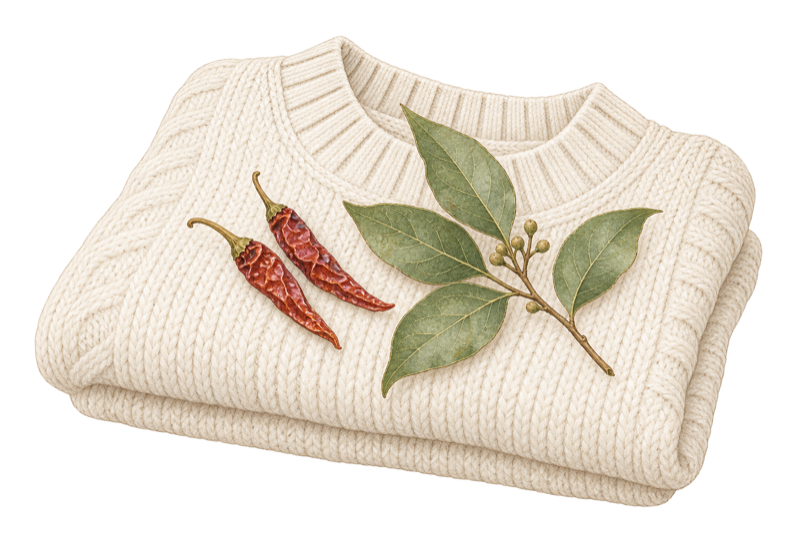
When I put away things I wear only once in a while, like winter wool or a hōmongi (a formal kimono), I sometimes put in chili peppers.
I used natural camphor too. The drawback is that the smell is strong.
TANE
Do chili peppers work?
Chili peppers in the rice bin have been studied by a national research institute in Japan.
The insects that get into rice did avoid the chili. But not strongly; it was less than half after 1 month, and zero after 3 months.
What works is not the heat. It is the scent. And the scent drifts off and is gone.
I did not find a record of it being tried on clothes insects.※39
Store-bought moth repellents come in four main kinds.
Pyrethroids, paradichlorobenzene, naphthalene, camphor.
Paradichlorobenzene is one of 13 substances for which Japan’s government has set a guideline: “in the air of a room, up to this concentration.”
Naphthalene and paradichlorobenzene are placed by the World Health Organization’s cancer research agency under “possibly carcinogenic to humans.”
That is the stage where there is sufficient evidence from animal experiments, and not enough evidence in humans.※40
All of them are sold with a set amount and a set way of use.
With that understood, I try the other roads first.
Even the natural ones are kept where children cannot reach.
Is the way of airing opposite in Japan and California?
It is. Japan says kage-boshi (陰干し), “dry in the shade.”
The University of California says to hang things in the sun now and then, and brush them down into the seams and folds.
TANE dries wool and silk in the shade, and puts cotton and linen in the sun.
What is being protected? The color, or against insects? The way of airing changes with that.※13
Does California have a “right to dry” law?
It does. Since 2016.
A rule by which a homeowners association bans a clothesline in a backyard that only you use became void.
Balconies and railings, however, are not covered.※14
With a yard that is out of view, the yard.
If it is in view, then the balcony, screened with slats or the like so it cannot be seen from outside, or else indoors. Those are the choices in California for now.
TANE
What is the “smell of the sun” the smell of?
There is a 2020 study from the University of Copenhagen.
Freshly washed towels were dried outside in the sun, in the shade, and indoors, and compared.
The pleasant-smelling compounds formed only when the towels were dried in the sun.
They seem to form when sunlight and air react on the surface of the wet cloth.
This was an experiment with laundry. It was not confirmed with futons.
I also often hear that “that is the smell of dead dust mites.” I looked for the original report and did not find it.※15
Where to start?
One drawer of the dresser. One shelf of the bookcase. Starting there is fine.
BODY & MIND
Body & mind
As the nights grow longer, turning a little attention inward, too.
- How to spend fall
- Where “looking inward” comes from
- Fall and the lungs
- For the dryness of fall
- Gathering in, storing away
- Six questions for yourself
- Ten minutes at night
- October 10
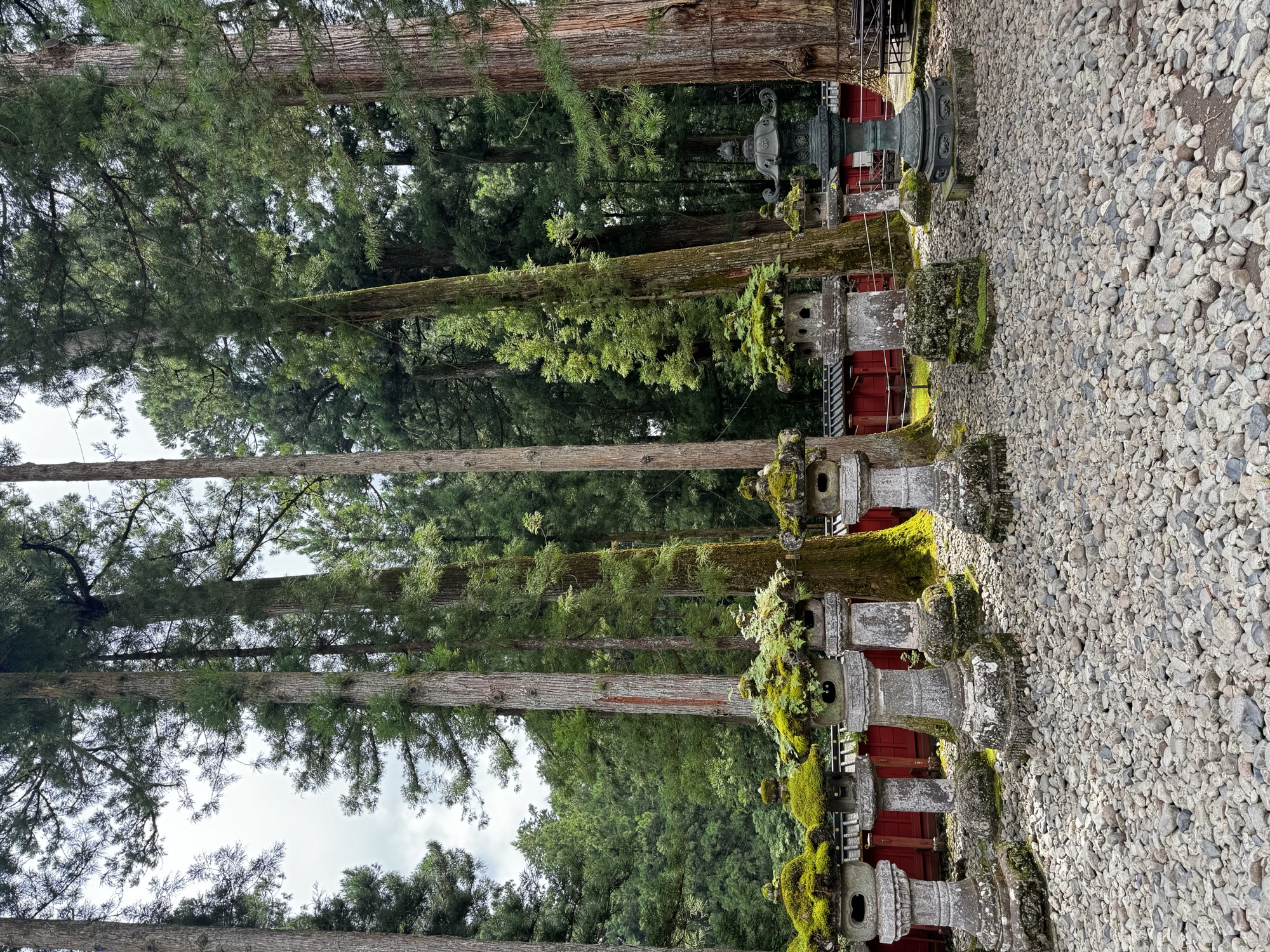
Time to feel what is going on inside me ── I think I am taking it, and I am not.
When a little time opens up, I open a screen.
Even the time to look at myself comes to feel like a bother.
But this is maintenance of myself. A season for looking inside properly, facing it, and letting myself feel it.
Seen that way, I think fall is lovely too.
TANE
How has it been said that fall is to be spent?
A Chinese book from about 2,000 years ago has a way of spending fall.
To go to bed early and rise early.
To keep the heart at peace.
To gather ki (氣) inward.
Not to turn the heart too far outward.
It called this the way of nourishing “gathering in.”
This is a reading found in an old book of medicine.
It is not a promise that doing so will do this or that to the body.※16
Does that book say “look inward”?
It does not. The word naikan (内観, “looking inward”) is not there.
What is there goes only as far as “not to turn the heart too far outward.”
“As the nights grow longer, turning a little attention to your own inside, too” is TANE’s reading.
How are fall and the “lungs” connected?
In the old way of thinking called yin-yang and the five phases (陰陽五行), fall is “metal.” Its direction is west, its color is white, and in the body the lungs are assigned to it.
It joins season, direction, color and body in a single table.
It has been handed down as a way of thinking that turns attention to the breath and the skin in dry times and at the turn of the seasons.
It does not show a connection with the workings of the lungs as today’s medicine describes them.
Wood = spring, east / Fire = summer, south / Earth = late summer, center / Metal = fall, west / Water = winter, north※17
What for the dryness of fall?
In China, it has been said: eat sesame, drink chrysanthemum wine.
“To guard against the dryness of fall.”※18
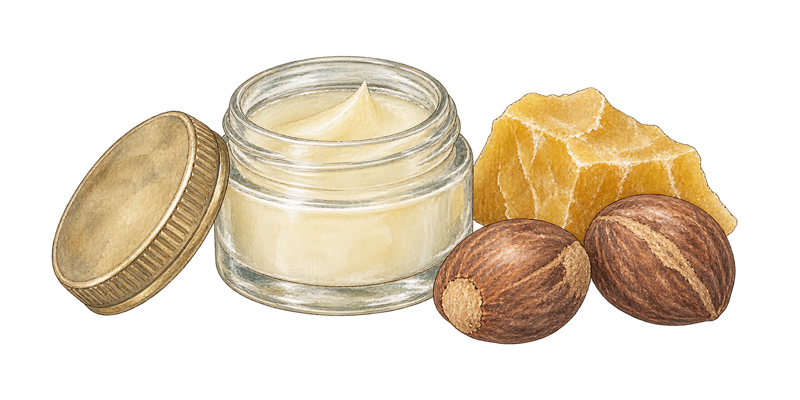
In fall, I put a little more shea butter and beeswax into the cream I make. It is to add moisture.
TANE
In guidance on kampo in Japan, lotus root, lily bulb, white sesame, Asian pear, persimmon and grapes are said to suit the dryness of fall. The thinking is that “white foods give moisture.”
The lotus root and persimmon listed under what is in season appear here, too.
How far any of it has been confirmed is another matter.※45
What is “gather in in fall, store away in winter”?
Words from the Shiji (『史記』), a Chinese book of history.
Born in spring, growing in summer, gathered in in fall, stored away in winter.
This, it says, is the great outline of the way of heaven.
There is also the phrase 「灯火親しむべし」 (tōka shitashimu beshi).
It means that fall, cool and with long nights, suits reading under a lamp.※19
This fall, what I am packing away is miso. Koji, amazake, shio koji. And then, things to dry.
TANE
Six questions to turn toward yourself
There is no need to write the answers down.
- What has borne fruit over this past year?
- What would you like to store up toward winter?
- What is in flower now, on the land where you are?
- What would you like to tend to before winter?
- What do you feel the seasons through?
- Have you been turning outward too much lately? What would you like a little less of?
Ten minutes at night ── doing what?
Settling the mind, meditating, reading a book. Stretching the body, listening to what the body is saying.
And then, thinking. The season of gathering in is the season of packing away. Now, in this season…… what shall I pack away tomorrow?
What kind of day is October 10?
Fall has been regarded as the season for gathering ki (氣) inward.
Even for someone who usually has no time to look inside,
this is a time to try looking in, on purpose.
During Kanro, every year, a day comes with two 10s side by side.
October 10.
In ancient Greece there were people who tried to read the world through numbers. They were the followers of Pythagoras.
They thought of 10 as “the complete number.”※50
Set dots in a triangle ── 1, 2, 3, 4 ── and they come to 10 in all.
The same arrangement as bowling pins.
They made that shape an important sign.※51
Japan, too, has an observance on a day when 10s double.
The night of the 10th day of the 10th month in the old calendar: Tōkan’ya (十日夜, “the night of the tenth”).
In eastern Japan, it is the day when, with the rice harvest finished, people see off the god of the rice field as it returns to the mountain.※52
On a day like that:
- Putting in order just one spot that the eye falls on
- Writing down three things you want to hold dear
- At night, putting three thanks from the day into words
Even if the 10th has passed, the day you notice is the day.
A day, in daily life, for looking at your own “inside.”
SKY & CALENDAR
Sky & calendar
The calendar was a way of reading the sky.
- Where the sun sets
- How the 24 solar terms are set
- The link to the zodiac signs
- Where Libra is
- How Libra has been read
- Setsu and chūki
- The characters 寒露
- What the calendar was for
- High sky, fat horses
- The seventy-two kō
- Sparrows into clams
- The day the calendar came to Japan
- Jūgoya and Jūsan’ya
- Where the 24 solar terms began
- Kigaku
Does the place where the sun sets move?
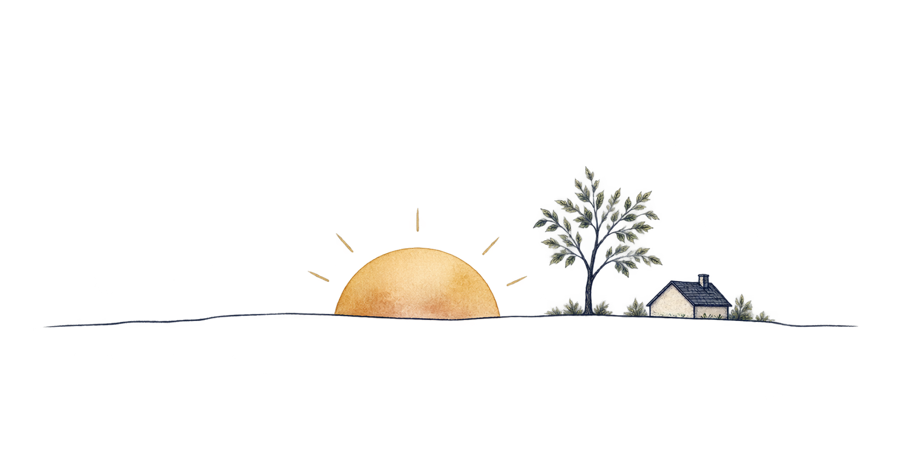
It moves. On the fall equinox, it is due west. From there until the winter solstice, it shifts a little farther south each day.
Around Kanro, it is about 7 degrees south of due west.
With a tree or a roof seen from the window as a marker, it is worth remembering the place where it set today. At the next term, Soko, one more look.※43
What sets the twenty-four solar terms?
Where the sun is in the sky.
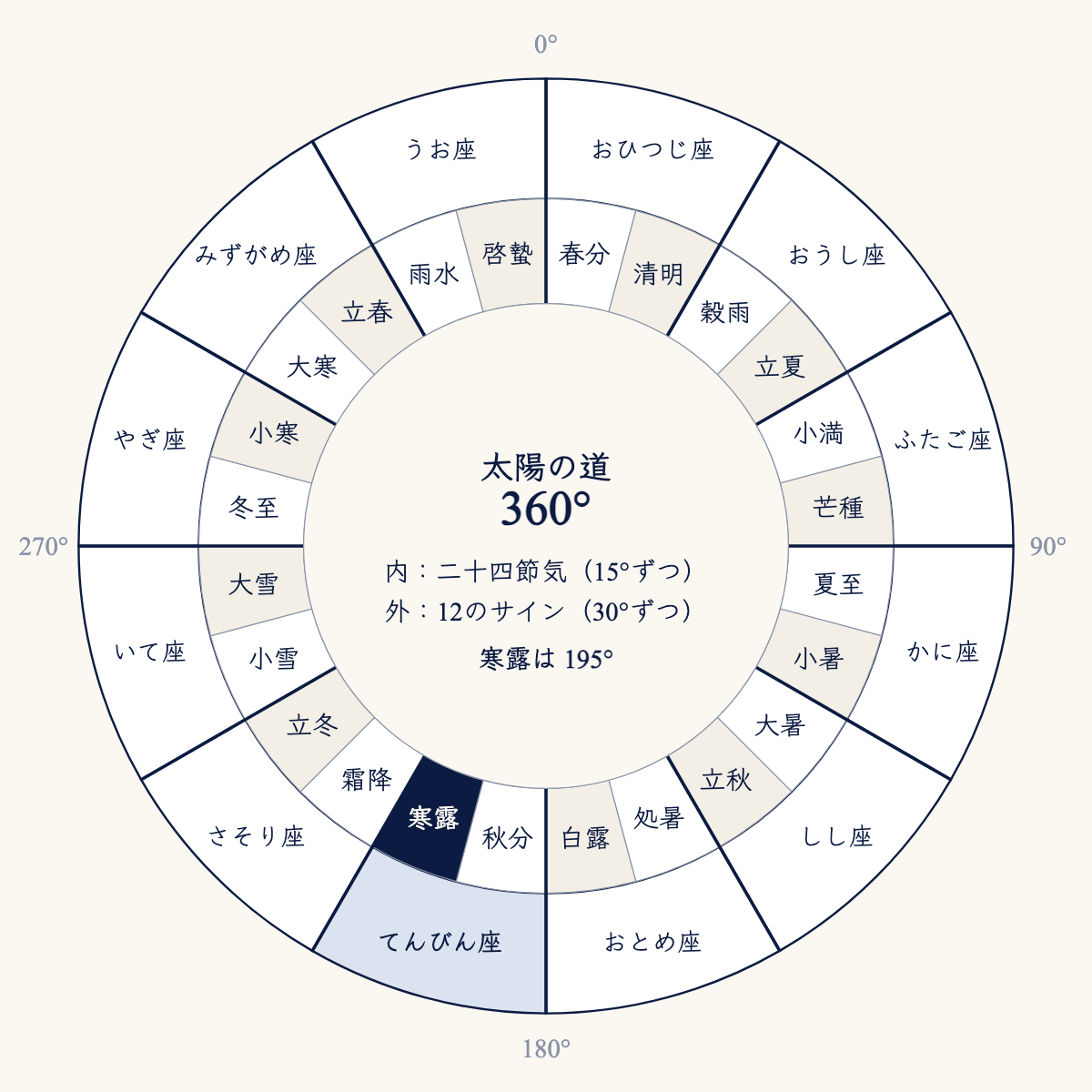
The full 360 degrees of the sun’s path were divided into 24 parts of 15 degrees each. Kanro is 195 degrees.※20
How does this relate to the zodiac signs?
The 12 signs of the West use the same 360 degrees. There, it was divided into 12 parts of 30 degrees each.
So the boundaries of the 12 signs sit in exactly the same places as half of the twenty-four solar terms (the chūki, 中気). Spring equinox = the start of Aries. Summer solstice = Cancer. Fall equinox = Libra. Winter solstice = Capricorn.
Libra begins at the fall equinox and ends at Soko. Kanro is its midpoint.※21
Is “Libra” the place of the constellation in the sky?
It is not. It is the name of an angle, counted from the spring equinox point.
Because the Earth’s axis slowly wobbles, the spring equinox point moves 1 degree every 72 years.
As a result, the signs and the constellations are now off from each other by roughly one.※22
How has Western astrology read Libra?
An air sign. Its ruling planet is Venus. Its meaning is “quick wit” (機転). That is how it has been read.
TANE takes this view, too, as a reference: knowledge that those before us cultivated.
Here, though, we are setting side by side how people have read the same sky.※22
What are “setsu” and “chūki”?
The twenty-four solar terms come in two kinds, lined up in alternation.
Kanro is 「九月節」, the setsu of the ninth month. Soko, which follows, is 「九月中」, the chū of the ninth month.
The boundaries of the Western signs are the 12 chūki (中気). The boundaries of the months in the Eastern calendar are the 12 setsu (節).
The same 24 marks are being used in alternation.
Kanro is, in the East, the start of a month. In the West, it is the middle of a sign.
The season words (kigo) of haiku also divide the seasons by the setsu.※23
Why is it written 寒露, “cold dew”?
An Edo-period commentary on the calendar puts it this way.
露結び凝らんとすれば也
Because the dew forms and is about to set hard
「凝る」 (koru) means to be on the way to setting solid. It is looking at the step just before frost.
The next term is Soko (霜降). There, the dew turns to frost and comes down.※24
What was the calendar for?
It was a guide for farm work.
A Korean encyclopedia says this.
Because this is the time when cold dew forms, the harvest has to be finished before the temperature drops further, and the villages are in the thick of threshing.
“The dew is cold” was not about how it feels. It was about a deadline.※25
Is 「天高く馬肥ゆる秋」 ── “fall, when the sky is high and the horses grow fat” ── a word of praise?
Today it is used to mean “a fine season.”
Originally, it is said, it was used to mean “they are coming to attack, on horses grown strong on the summer grass.” The season of harvest was also the season of being raided.
When did the age of taking from one another begin?
Some hold that it was after farming began.
TANE
The archaeologist Sahara Makoto (佐原真) thought of it this way. Weapons made to harm people, and moats for defense, appear after farming began. People fought over the surplus that farming produced, and that is how warfare started.
There are counterarguments, too. A cemetery in Sudan from more than 12,000 years ago, and bones from the Jomon period, are also said to bear marks of injury.※44
Did people long ago divide the 15 days into three more?
They did. It is called the seventy-two kō (七十二候, shichijūni-kō). The three for Kanro are these.
Wild geese arrive
Chrysanthemums open
Insects sing at the door
Wild geese come as guests
Sparrows enter the great water and become clams
Chrysanthemums bear yellow flowers
Every name is made of something that can be seen. Not temperatures or dates, but geese, chrysanthemums, insects.※27
Sparrows become clams?
In the old Chinese calendar, the middle of Kanro carried that name.
雀入大水為蛤
Sparrows enter the great water and become clams
The Japanese calendar does not have this name.
In the Edo period, calendar scholars rewrote it to suit Japan’s climate and land.
What went in instead was “chrysanthemums open.”
Reading the calendar over again to fit one’s own land. That was already done once, in the Edo period.※27
When did the calendar come to Japan?
The calendar reached Japan from China by way of the Korean Peninsula.
It is told that Japan’s first calendar was made in 604, in the Asuka period.
After that, Japan used a Chinese calendar from 862 to 1685.
That is about 823 years. In 1685, Shibukawa Shunkai (渋川春海) compiled a calendar by Japanese hands for the first time.※28
How do Jūgoya and Jūsan’ya differ?
The custom of gazing at the moon of Jūgoya (十五夜, “the fifteenth night”) came from China. The custom of admiring the moon of Jūsan’ya (十三夜, “the thirteenth night”) was born in Japan.
Other names for Jūsan’ya are Kuri-meigetsu (栗名月, “chestnut moon”) and Mame-meigetsu (豆名月, “bean moon”). Chestnuts and edamame gathered around this time are set out as offerings. One of its origins is held to be the moon-viewing banquet of 919, at which the Cloistered Emperor Kanpyō (寛平法皇) praised the moon of the thirteenth night.
A calendar was borrowed, and one thing was added on their own land.
When and where did the twenty-four solar terms begin?
They were devised around China’s Warring States period (the 300s BCE).
In 2016, they were inscribed as UNESCO Intangible Cultural Heritage.※30
Is “Kigaku” (気学) something old?
The Nine Stars (九星, kyūsei) are old. They came down from ancient China.
But it was in Japan, in Meiji 42 (1909), that they were combined with the sexagenary cycle (eto) and the five phases and put together as “Kigaku.”
The seventy-two kō, Jūsan’ya, Kigaku. For a thousand years, Japan has been taking what it borrowed and putting it together again on its own land.※31
ACROSS THE WORLD
Other countries, other readings
The same season, each on its own land.
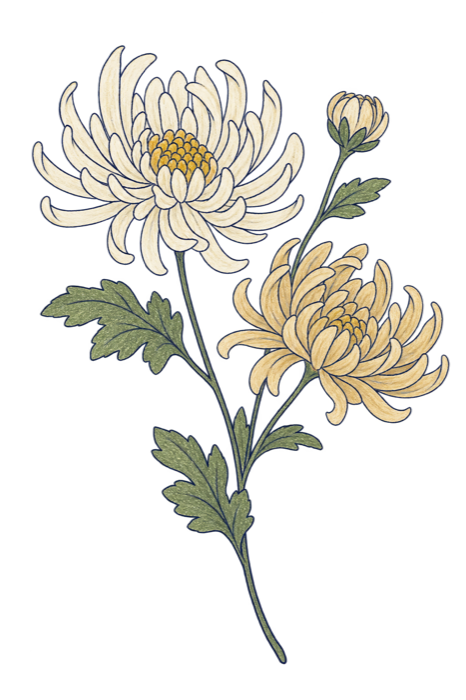
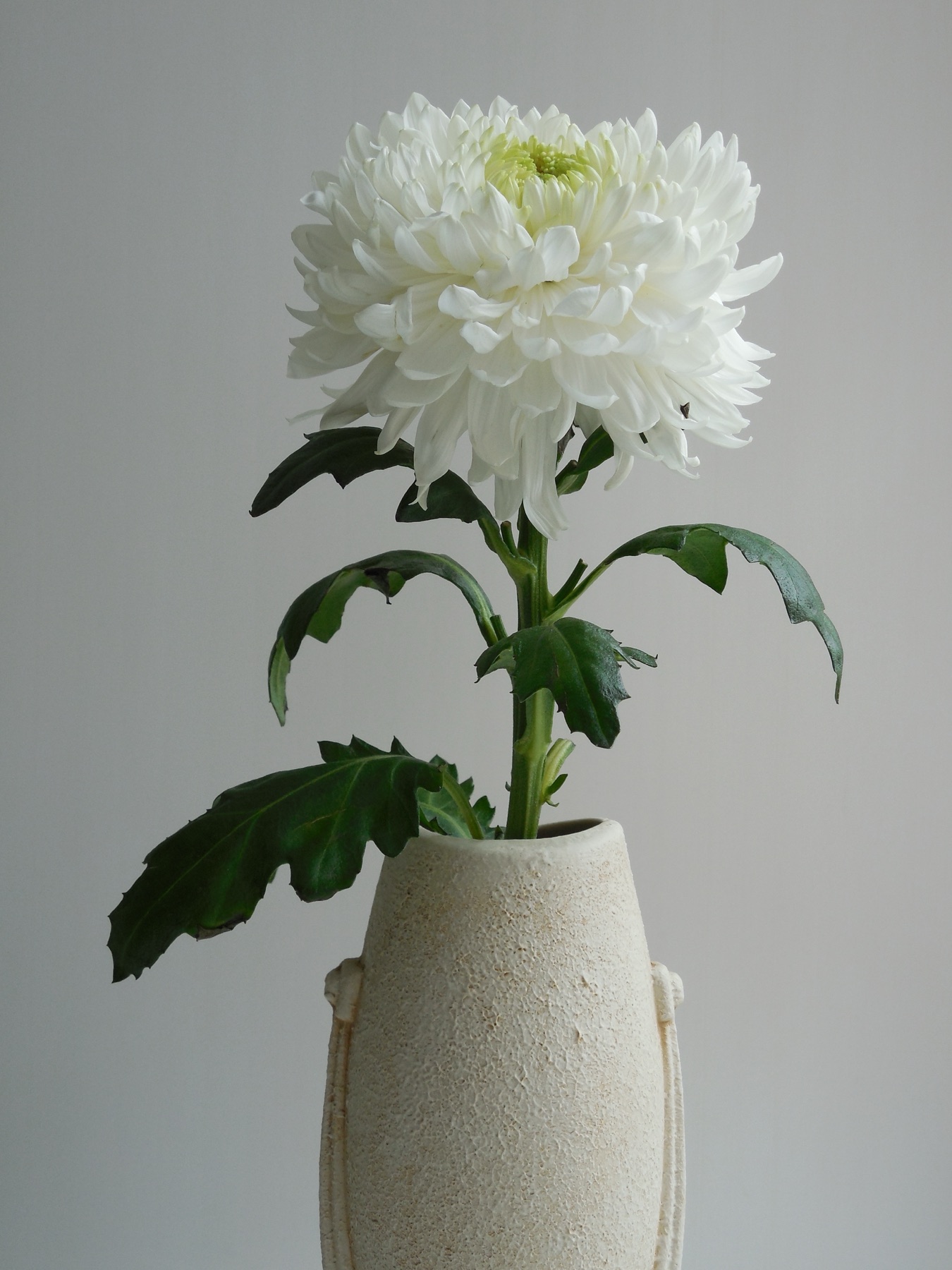
Chrysanthemums tend to be thought of as somehow plain. But there are perfectly round ones, and the colors are very rich.
Just one stem in a room changes the mood. One flower to feel the season by.
TANE
Why is the ninth day of the ninth month “Chōyō”?
The 9th day of the 9th month in the old calendar. In Japan it is also called Kiku no Sekku (菊の節句), the Chrysanthemum Festival.
In yin-yang thinking, odd numbers are yang numbers. It is the day when 9, the largest of them, doubles; hence Chōyō (重陽, “doubled yang”).
It often falls around Kanro.※32
How did three countries use the same chrysanthemum?
Drinking chrysanthemum wine
Climbing a mountain
Pan-frying chrysanthemum flowers to eat
Making chrysanthemum wine
Climbing a mountain
Drinking chrysanthemum wine
Laying cotton on chrysanthemums to take up the dew, and wiping the body with it
In the term of dew, the dew of chrysanthemums. For Japan alone, I did not find any account of climbing a mountain.※33
There are chrysanthemums for eating, too. Yamagata’s “Mottenohoka” (もってのほか) comes from the end of October to the start of November.
The petals are boiled for about 1 minute in water with vinegar added.※41
What is done in China around this time?
Climbing mountains. Looking at the fall leaves. It has been said that “the mountains in fall color are like clouds of brocade.”
Eating sesame. Eating crab. Drinking chrysanthemum wine.
Fishing near the bank. That is because the water cools and the fish come into the shallows.※18
And in Korea?
Around Kanro, chrysanthemum-flower pancakes (菊花煎) are fried and chrysanthemum wine is made.
Gatherings and outings grow lively. Young people today hardly know of this.
Around this time, putting 茱萸 (shuyu) in the hair, and climbing to a high place to look toward one’s hometown, come up often in classical Chinese-style poetry. It was believed that climbing a high mountain and putting shuyu berries in the hair could drive away bad things.※34
And fall in the West?
Fall has been tied to pensiveness, in poetry especially.
Keats’s “To Autumn” (September 1819) writes of both pensiveness and the richness of the harvest.
Harvest festivals, the Celtic fall festival (Samhain), the Day of the Dead. All of them come in fall.※35
How TANE read it
Looking into Kanro, what stayed with me most was how much it resembles astrology.
In the East, that became culture in the form of the calendar.
At a time when there was no means even of going to other countries, people in separate civilizations looked at the sky, looked at the seasons, and found much the same routines.
I think that is wonderful.
People living together with nature and the sky, and the ability to sense it. I am moved by the wisdom that has been handed down.
Knowing this, I begin to notice the turning of the seasons. I learn that in a season like this, those before us put this kind of wisdom and knowledge to use. Then how could it be put to use in life now?
Thinking about that is a pleasure.
Fall in California is not like fall in Japan.
The temperatures are higher in California, and the winter too, I think, is warm beyond comparison with Japan.
But it is because I have been away from Japan that I want to leave to the children the everyday wisdom of those before us, who felt the four seasons and felt something in each of them, and their ways of being connected with nature.
I want to keep passing it on.
These days are busy, with no time to feel the season. I seldom think about the calendar, or look up at the sky.
Not only turning my eyes to a screen:
looking at the sky.
Feeling the wind.
Looking at what I am cooking with.
Getting to know fall.
Looking at a tree.
Breathing in deeply.
Following nature, and looking at my own inside.
A small change in how things are felt in days like these, a change of where one looks from,
and something different may come into view.
TANE
NOT YET
What is not yet known
Things I looked for and did not find. I am leaving them here as they are.
- A set food in Japan, of the kind “this is eaten at Kanro.”
- Farm work in Japan that belongs to Kanro alone. A Korean encyclopedia says “in the thick of threshing,” but I have not yet opened Japan’s old farming books.
- Whether Japan had a custom of climbing a mountain at Chōyō.
- The exact year when Japan’s seventy-two kō were rewritten. I could find out no more than “the Edo period.”
- The date that marks the boundary of the picking season for fall tea.
- Whether the months of Kyūsei Kigaku (九星気学, Nine Star Kigaku) change over on the day of a setsu.
Open the sources (※1–※52)
- ※1Japan Weather Association, tenki.jp / All About 「暮らしの歳時記」
- ※2Five pages that explain Kanro, and a list of foods for yearly observances (Japanese Wikipedia, 「行事食」)
- ※3Ministry of Agriculture, Forestry and Fisheries of Japan (MAFF), 「にっぽん伝統食図鑑」, 常陸秋そば
- ※4日穀製粉, 山形物産 and others (makers’ guidance) / DELISH KITCHEN / Consumer Affairs Agency of Japan, 「食物アレルギー表示」 / Shinshu University Faculty of Agriculture, 「ソバ図鑑」
- ※5MAFF, 「特別栽培農産物に係る表示ガイドライン Q&A」 / 「有機食品の検査認証制度」
- ※6Minamikyushu City (南九州市) / MAFF, 「茶をめぐる情勢」
- ※7MAFF, こどもそうだん / 市田柿ブランド推進協議会 / The Japanese Society of Plant Physiologists (日本植物生理学会), 植物Q&A
- ※8An event notice from the University of California ANR South Coast Research and Extension Center (not statistics on the harvest season)
- ※9Kotobank (コトバンク), 「虫干し」 (デジタル大辞泉, 日本大百科全書 and others)
- ※10鈴乃屋, 「虫干し」 / 京都銭京 (kimono retailers)
- ※11ニッセンケン品質評価センター / Library of Congress, “Storing Your Books”
- ※12Tokyo National Research Institute for Cultural Properties (東京文化財研究所), 「イガ」 / 全国クリーニング生活衛生同業組合連合会, 「防虫剤」 / UC IPM, “Clothes Moths”
- ※13UC IPM (University of California), “Clothes Moths”
- ※14California Civil Code 4750.10
- ※15Pugliese et al., Environmental Chemistry 17(5), 2020
- ※16『黄帝内経 素問』四気調神大論
- ※17Japanese Wikipedia, 「五行思想」
- ※18China Daily / Beijing Tourism
- ※19『史記』太史公自序 / Kotobank, 「灯火親しむべし」
- ※20National Astronomical Observatory of Japan (国立天文台), 暦要項
- ※21Japanese Wikipedia, 「黄道十二宮」 / calculation
- ※22Japanese Wikipedia, 「黄道十二宮」
- ※23Japanese Wikipedia, 「二十四節気」
- ※24『暦便覧』 (as quoted in Japanese Wikipedia, 「寒露」)
- ※25日本伝統野菜推進協会 / Encyclopedia of Korean Culture (韓国民族文化大百科事典)
- ※26暦生活, 「天高く馬肥ゆる秋」
- ※27Japanese Wikipedia, 「七十二候」
- ※28National Diet Library of Japan (国立国会図書館), 「日本の暦」 / Japanese Wikipedia, 「貞享暦」
- ※29Sendai Astronomical Observatory (仙台市天文台), 「後(のち)の月」
- ※30Japanese Wikipedia, 「二十四節気」 / UNESCO
- ※31Japanese Wikipedia, 「九星」 and 「九星気学」
- ※32Japanese Wikipedia, 「重陽」
- ※33China Daily / Encyclopedia of Korean Culture (韓国民族文化大百科事典) / Japanese Wikipedia, 「重陽」
- ※34Encyclopedia of Korean Culture (韓国民族文化大百科事典; Academy of Korean Studies)
- ※35English Wikipedia, “Autumn”
- ※36サライ.jp, 「古くなったお茶をほうじ茶に」 (an article by a registered dietitian. Not an official source)
- ※37MAFF, 「にっぽん伝統食図鑑」, 干し柿 (in the producing regions, there is a step of smoking with sulfur before drying)
- ※38Kotobank, 「樟脳」 (デジタル大辞泉, 日本大百科全書)
- ※39NARO Food Research Institute (農研機構 食品総合研究所), 「乾燥唐辛子にコクゾウムシへの防虫効果はあるのか」 (a one-page summary of results. 1 g of sliced rings: 88.7% freshly opened, 39.6% after 1 month, 0% after 3 months)
- ※40Indoor air concentration guideline values of Japan’s Ministry of Health, Labour and Welfare (Osaka Prefecture, 「化学物質濃度指針値」: paradichlorobenzene 240μg/m³) / IARC Monographs Vol.73 (1999, paradichlorobenzene) and Vol.82 (2002, naphthalene), both Group 2B
- ※41HugKum, 「もってのほか」 (an article with expert supervision. Not an official source)
- ※42Fukuoka Regional Headquarters, Japan Meteorological Agency (福岡管区気象台), 「はれるんマガジン」 No. 17 (an explanation of frost. That dew works by the same mechanism is TANE’s reading)
- ※43National Astronomical Observatory of Japan, 暦Wiki, 「太陽の南中高度と日出没の方位」 (「春分・秋分のころ…ほぼ真東から昇り真西に沈みます」「冬至のころ…真西よりも南寄りに沈みます」 ── around the spring and fall equinoxes it rises almost due east and sets due west; around the winter solstice it sets south of due west) / the 7 degrees is TANE’s calculation (around 35° north latitude)
- ※44Matsugi Takehiko (松木武彦, National Museum of Japanese History), 「考古学から見た戦いの始まり」, lecture materials from Shimane Prefecture (Sahara Makoto’s view, and the counterarguments to it)
- ※45Japan Foundation for Aging and Health (長寿科学振興財団), 「秋の養生」, Sugiyama Takuya (杉山卓也; pharmacist and kampo advisor. The names of the classical texts behind it are not given)
- ※46Harvard University, “Science in the News,” Katherine Wu, “Why don't sheep shrink in the rain?” (2018)
- ※47週刊女性PRIME (as told by Ōshima Naoko (大島直子) of the カジタク housekeeping team. Not an official source. It says the conditioner is one that contains “amodimethicone” or “dimethicone”)
- ※48Consumer Affairs Agency of Japan, 「新しい洗濯表示」
- ※49CDC, “Updated Information regarding Mosquito Repellents” (2008. “‘Pure’ oil of lemon eucalyptus (e.g. essential oil) … is not covered by this CDC recommendation”)
- ※50Aristotle, Metaphysics, Book 1, 986a (trans. Hugh Tredennick. “the decad is considered to be a complete thing and to comprise the whole essential nature of the numerical system”)
- ※51English Wikipedia, “Tetractys” (ten points set in a triangle of four rows. A sign of the Pythagoreans)
- ※52Kotobank, 「十日夜」 (デジタル大辞泉, 日本大百科全書 and others. It corresponds to 「亥の子」 (Inoko) in western Japan)
Sources opened during the research (68)
- National Astronomical Observatory of Japan (国立天文台), 暦要項 2026, 「二十四節気および雑節」
- Japan Weather Association, tenki.jp, 「二十四節気『寒露』はどんな季節?」
- All About 「暮らしの歳時記」, 「二十四節気『寒露』とは?」
- China Daily, “24 Solar Terms: 8 things you may not know about Cold Dew”
- Beijing Tourism, “Learning Chinese | Cold Dew (寒露)”
- Japanese Wikipedia, 「寒露」 (the quotation from 『暦便覧』; the seventy-two kō; the definition by ecliptic longitude)
- Encyclopedia of Korean Culture (韓国民族文化大百科事典; Academy of Korean Studies), 「한로」
- Japanese Wikipedia, 「黄道十二宮」 (twelve equal parts of 30° of ecliptic longitude each; the table matching them to the twenty-four solar terms)
- 一般社団法人 日本伝統野菜推進協会, 「農事暦って何?」 (unsigned)
- University of California ANR, South Coast Research and Extension Center (Irvine, CA), Events
- Japanese Wikipedia, 「七十二候」 (the kō of Japan and of China side by side; Shibukawa Shunkai (渋川春海); 略本暦)
- Japanese Wikipedia, 「五行思想」 (the table of five-phase correspondences; 『書経』洪範篇; the yin-yang and five phases theory of the Han period)
- Sendai Astronomical Observatory (仙台市天文台), 「2026/10/23 後(のち)の月」 (Jūsan’ya; Kuri-meigetsu (栗名月); a custom born in Japan)
- 暦生活, 「天高く馬肥ゆる秋」 (it was originally a warning about the Xiongnu (匈奴))
- Japanese Wikipedia, 「二十四節気」 (setsu and chūki; the twelve setsu (節切り, sekkiri); season words (kigo); the period when it took shape)
- Japanese Wikipedia, 「重陽」 (the chrysanthemum festival; chrysanthemum sake; laying cotton on the chrysanthemums to take up the dew)
- UNESCO Intangible Cultural Heritage, “The Twenty-Four Solar Terms, knowledge in China of time and practices developed through observation of the sun's annual motion” (2016; Representative List)
- Japanese Wikipedia, 「九星」 (the magic square of 洛書 (Luoshu); handed down from ancient China)
- Japanese Wikipedia, 「九星気学」 (園田真次郎; Meiji 42 (1909))
- Japanese Wikipedia, 「貞享暦」 (the first compiled by Japanese hands; 1685; the 宣明暦 (Senmyō calendar) was about 823 years)
- Ministry of Agriculture, Forestry and Fisheries of Japan (MAFF), 「消費者の部屋」こどもそうだん, 「甘柿と渋柿(しぶがき)の違いについて教えてください。」
- 市田柿ブランド推進協議会, 「干し柿と脱渋の仕組み」
- The Japanese Society of Plant Physiologists (日本植物生理学会), みんなのひろば 植物Q&A, 「柿の渋抜きについて」 (answer by 勝見允行)
- Japanese Wikipedia, 「行事食」 (the foods of Setsubun, the winter solstice and Jinjitsu. Kanro is not listed)
- National Diet Library of Japan (国立国会図書館), 「日本の暦」, 暦の渡来と普及
- Kotobank (コトバンク), 「虫干し」 (デジタル大辞泉, 日本大百科全書, ブリタニカ, 世界大百科事典, マイペディア)
- Ministry of Agriculture, Forestry and Fisheries of Japan (MAFF), 「にっぽん伝統食図鑑」, 常陸秋そば
- Minamikyushu City (南九州市), 「二番茶・三番茶・四番茶・秋冬番茶」
- MAFF, Kanto Regional Agricultural Administration Office (関東農政局), 「茶をめぐる情勢」, 令和7年10月 (October 2025)
- 『黄帝内経 素問』四気調神大論 (古诗文网)
- 『史記』巻130 太史公自序 (維基文庫)
- English Wikipedia, “Autumn”
- Kotobank, 「灯火親しむべし」
- MAFF, 「特別栽培農産物に係る表示ガイドライン Q&A」 (平成20年6月 (June 2008)), Q5, Q6, Q50
- MAFF, 「有機食品の検査認証制度」
- Consumer Affairs Agency of Japan, materials on 「食物アレルギー表示」 (「そば」 (buckwheat) is in the table of 特定原材料, the specified ingredients)
- 日穀製粉ショップ, 「そば茶の美味しい淹れ方」 (8 g to 450 ml, 2–3 minutes / simmering: 18 g to 3 L, about 3 minutes)
- 山形物産, product page for soba tea (one tablespoon; boiling water; about 2 minutes)
- sobacha.com (boiling water; 3–5 minutes. Much of the page’s text is garbled, and its reliability is low)
- DELISH KITCHEN, 「そば茶」 (100 g of buckwheat groats; medium-low heat for about 10 minutes. A cooking site)
- Shinshu University Faculty of Agriculture, Plant Breeding Laboratory, 「ソバ図鑑」 (common buckwheat *Fagopyrum esculentum* / Tartary buckwheat *F. tataricum*; bitter taste)
- California Civil Code 4750.10 (AB 1448; enacted October 8, 2015; from January 1, 2016)
- Pugliese S. et al., “Chemical analysis and origin of the smell of line-dried laundry,” *Environmental Chemistry* 17(5), 2020 (University of Copenhagen)
- ニッセンケン品質評価センター, 「色の変化~黄変~」
- Library of Congress, “Storing Your Books”
- Tokyo National Research Institute for Cultural Properties (東京文化財研究所), 「イガ」
- 全国クリーニング生活衛生同業組合連合会, 「防虫剤」
- UC IPM (University of California), “Clothes Moths”
- 鈴乃屋, 「虫干し」 (a kimono retailer)
- 京都銭京, Q7 (a kimono retailer)
- 加藤・田淵 (2016), 『農業および園芸』91巻10号 (MAFF, AgriKnowledge)
- Kotobank, 「樟脳」 (デジタル大辞泉, 日本大百科全書)
- NARO Food Research Institute (農研機構 食品総合研究所), 「乾燥唐辛子にコクゾウムシへの防虫効果はあるのか」 (宮ノ下明大; a presentation of research results)
- Osaka Prefecture, 「化学物質濃度指針値」 (a list of the indoor air concentration guideline values of Japan’s Ministry of Health, Labour and Welfare)
- IARC Monographs Vol.73 (para-Dichlorobenzene, 1999) / Vol.82 (Naphthalene, 2002)
- サライ.jp, 「古くなったお茶をほうじ茶に」 (矢崎海里, registered dietitian. Not a public document)
- Ministry of Agriculture, Forestry and Fisheries of Japan (MAFF), 「にっぽん伝統食図鑑」, 干し柿
- 松木武彦 (National Museum of Japanese History), 「考古学から見た戦いの始まり」, lecture material of Shimane Prefecture
- Japan Foundation for Aging and Health (長寿科学振興財団), 「秋の養生」, 杉山卓也 (pharmacist, Kampo advisor)
- Fukuoka Regional Headquarters, Japan Meteorological Agency (福岡管区気象台), 「はれるんマガジン」第17号, 「霜は晴れた日におりるのはどうして?」
- National Astronomical Observatory of Japan, 暦Wiki, 「太陽の南中高度と日出没の方位」
- HugKum, 「もってのほか」 (supervised by 松田慶子. Not a public document)
- Harvard University, Science in the News, “You Asked: Why don't sheep shrink in the rain?” (Katherine Wu, 2018)
- 週刊女性PRIME (as told by 大島直子 of the カジタク housekeeping service team. Not a public document)
- Consumer Affairs Agency of Japan, 「新しい洗濯表示」
- Aristotle, 『形而上学』 (Metaphysics), Book 1, 986a (translated by Hugh Tredennick, Harvard University Press, 1933. Perseus Digital Library)
- English Wikipedia, “Tetractys” (the sentence “The four rows add up to ten” has no citation attached. Britannica could not be opened)
- Kotobank, 「十日夜」 (デジタル大辞泉, 精選版 日本国語大辞典, 日本大百科全書, ブリタニカ国際大百科事典)